How to Write Memorable Product Names and Compelling Descriptions
What’s in a name? For memorable product names, the answer is everything.
A great product name and description can mean the difference between a bestseller and something that barely gets noticed.
Remember the indelible “Balm Dotcom” (Glossier)? How about “Pillow Talk” (Charlotte Tilbury)? “Orgasm” (Nars) or “Better Than Sex Mascara?” (Too Faced)?
Ok, I see a theme forming; let’s move on!
Product names are often a potential customer’s first impression of your brand. They set the tone for the product’s identity and promise.
Consequently, your product names must be catchy, concise, and informative while maintaining your brand voice.
But coming up with the perfect name or description can feel like trying to catch lightning in a bottle.
It takes creativity, strategy, and a deep understanding of your audience.
In this post, you’ll learn how to create product names and descriptions that grab attention, speak to their needs, and—most importantly—drive sales.
Ready? Let’s dive in.
The Power of a Great Product Name
A product name is more than just a label; it’s a way to capture attention, spark curiosity, and represent what the product delivers.
The best names don’t just tell you what the product is—they make you feel something.
Think AirPods, Big Mac, or Fitbit. Each are short, snappy, and full of meaning.
With little exception, four characteristics go into creating a memorable product name:
- Short and Simple: Easy to say, spell, and remember. Examples: iPad, Whopper, Roomba.
- Relevant: A good name reflects the product’s purpose or unique value. Fitbit = fitness + tracking.
- Unique: It has to stand out in a sea of competitors. Oatly (an oat-based milk product) is distinctive and modern, just like the brand.
- Evocative: The best names spark curiosity or emotion. Think of Kind, which suggests a healthy snack and positive vibes.
Now that we’ve covered the basic guidelines, let’s delve deeper into product naming tips.
Step-by-Step Process for Naming a Product
Naming a product might seem straightforward initially, but coming up with catchy product names is a delicate balance between creativity, marketability and copywriting strategy.
Here’s how I think about naming products for my clients.
Know Your Audience and Market
Before you start brainstorming, getting clear on your audience is essential.
- What do they care about?
- What language do they use to describe their needs and desired results?
- What do they relate to?
Think about their preferences, tendencies, and even cultural nuances. A name that clicks with a busy parent might not resonate with a tech-savvy Gen Z crowd, so knowing your audience is everything.
Then, take a look at what’s already out there. Study your competitors’ product names and get curious about what’s working for them. More importantly, where’s the opportunity to do something different?
The goal is to find your own unique space in the market.
This brings us to the fun and creative part of the process: brainstorming.
Brainstorm Ideas
Once you know your audience and have scoped out the competition, it’s time to let the creativity flow.
- Start jotting down ideas using word association, mind mapping, or even blending words. For example, Nutella combines “nut” (a key ingredient) and “ella,” giving it a friendly, sweet feel that’s hard to forget.
- Get your team or customers involved. Different perspectives will spark fresh ideas.
- Don’t filter yourself. Quantity will lead you to quality.
Test for Uniqueness
Once you’ve got a list of potential names, it’s time to see if you can use them.
- Search trademark databases and social media to avoid legal or branding issues.
- Make sure your name doesn’t sound too close to competitors—confusion isn’t cute.
- The more unique, the better, but it has to make sense.
Refine and Simplify
Once you’ve narrowed your list, it’s time to start refining. Most of the time, especially in copy, less is more.
Aim for something easy to say, spell, and remember. Apple’s “Macintosh” became “MacBook” for a reason.
Consider: Does this name really capture what the product is about? Does it resonate with your audience? The best product names are often the simplest and most intuitive ones.
And finally, test, test, test.
Validate with Your Audience
The last step is to take your name out into the world. Test it with your audience and teams through surveys, focus groups, or A/B testing to see how it resonates.
Pay attention to their reactions.
- Does the name make them smile?
- Does it spark curiosity or excitement?
- And most importantly, does it get engagement and clicks?
Next, we move into the “secret sauce” of product descriptions that keep your audience’s attention and deliver on the promise of your product’s name.
Examples of Memorable Product Names


The Secret Sauce of a Great Product Description
A good product description isn’t just a list of features; it’s a micro-story designed to hook your audience and get them excited about your product.
While it’s tempting to lead with specs, customers care more about how the product will transform their lives—by meeting a desire or solving a problem.
In a crowded market, customers want to know one thing: What’s in it for me?
Answer that question right away by addressing their needs and desires directly. Even better if you incorporate their words and feedback to do it.
Here’s what goes into a successful and high-converting product description:
- Focus on Benefits, Not Just Features
- Explain how the product improves the customer’s life. Instead of listing “10-hour battery life,” say, “Stay connected all day without worrying about charging.”
- Know Your Audience
- Speak directly to your target market’s desires, pain points, and preferences. If you’re selling premium skincare, emphasize observable results and the emotional payoff (confidence).
3. Paint a Picture
- Help the reader imagine using the product. For instance, a luxury blanket’s description might say, “Wrap yourself in a cloud.”
4. Keep It Tight
- Avoid fluff, but don’t skimp on details. Highlight key features in an engaging way after starting with a compelling hook.
5. Incorporate Keywords, Naturally
- Optimize for search engines by naturally including relevant keywords.
6. Include Reviews
- Include customer reviews and your responses to them about the specific product.
OK, now let’s apply this foundational knowledge to writing the product description.
7 Steps to Writing Product Descriptions That Sell
While listing the benefits and features may seem like enough, there’s a method to the creative madness that considers customer psychology and sales.
Here are the 7 critical steps to write a product description that sells like Labubus!
1. Start with the Product Name & Hook
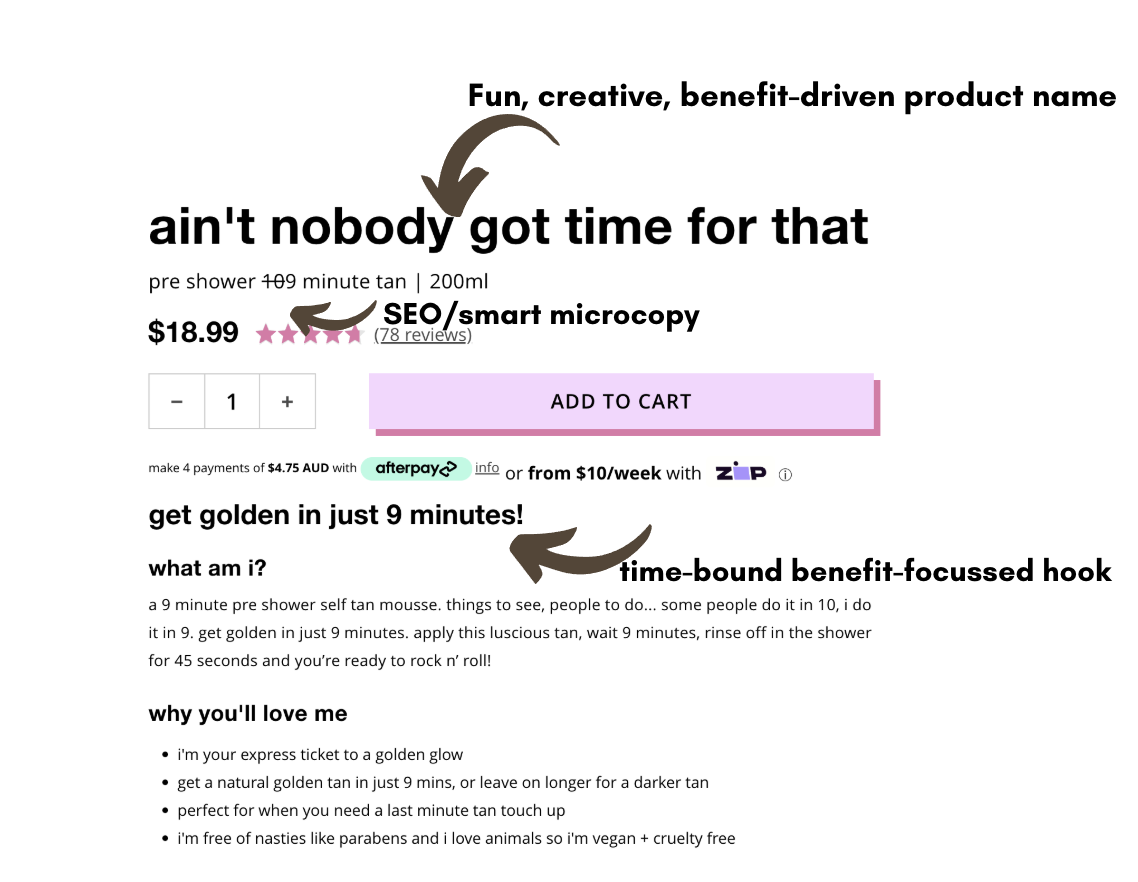
- The first sentence of the product copy is the most important and is called the hook. This line needs to spark curiosity, deliver an impactful punch or cause your reader to sit up and take notice.
A great example of this comes from the b.tan brand – see the graphic below for a breakdown.
2. Tell a Micro-Story
Storytelling has long been a marketing and copywriting tactic because it is a relatable, compelling way to sell. It taps into the customer’s emotions, which often drive the initial impulse to buy.
Sticking with the same example of b.tan, the next few lines of the description tell a story the customer can see themselves in. A fun quirk is that the product is the narrator.
The Micro-Story:

This copy is so great for many reasons, including:
- Clear Value Proposition – “Get golden in just 9 minutes!” immediately communicates the product’s key benefit: speed and efficiency.
- Relatable Tone -The conversational language, like “things to see, people to do…some people do it in 10, I do it in 9”, adds personality and makes the product feel approachable.
- Customer-Centric Focus – The copy emphasizes what the customer will gain (“your express ticket to a golden glow”) rather than just listing features.
3. Highlight Unique Selling Points (USPs)
Emphasize what sets your product apart. What problem are you solving that other products don’t? How does your product accomplish this? What do customers need and want to hear about why your product deserves their money?
The b.tan name and product description nail all of these points, as shown above.
4. Break It Down with Bullets
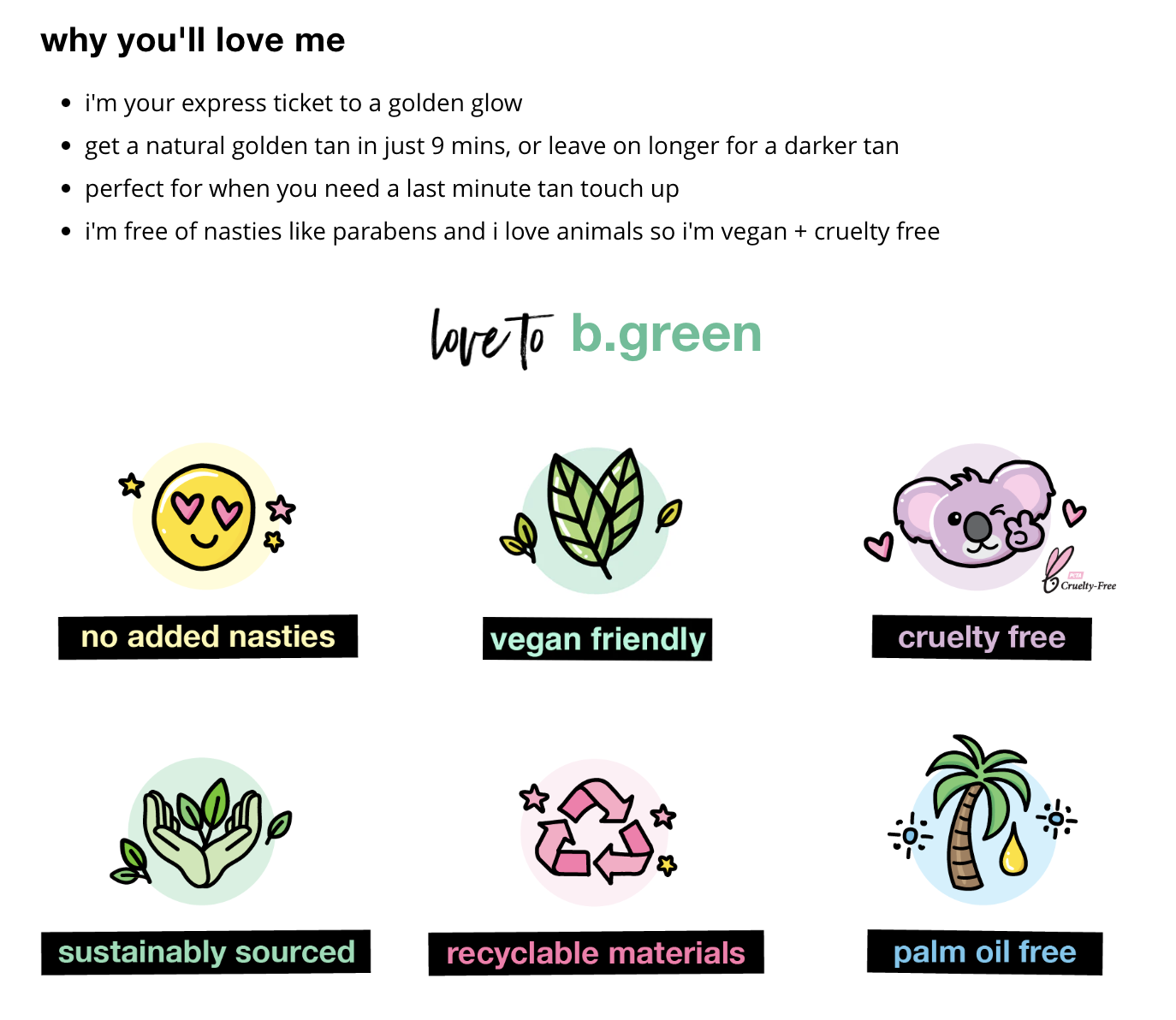
Some customers will read every word more than once, some are image-driven, and some skim and impulse-buy. To serve all potential customers, the copy must break down key features and benefits into easily digestible chunks and infographics.
You’ll see this on almost every product page, including b.tan’s as shown below.
5. Reviews
It almost pains me that the reviews come so low because they are possibly the most compelling and sought-after copy on the page — and the stats tell the story.
According to Forbes, 98% of consumers read reviews before making a purchase. Moreover, customers tend to trust companies with a higher volume of reviews, with an average consumer reading around 10 before forming an opinion of trust. (Study by BrightLocal)
Reviews should be built into your web and product pages and shared with copywriters -> read this to understand why.
6. Ingredients/Specs/Features
While these components shouldn’t come first, they must be part of the page. List all necessary ingredients, components, and applicable and legally required features.
7. Include a Call-to-Action (CTA)
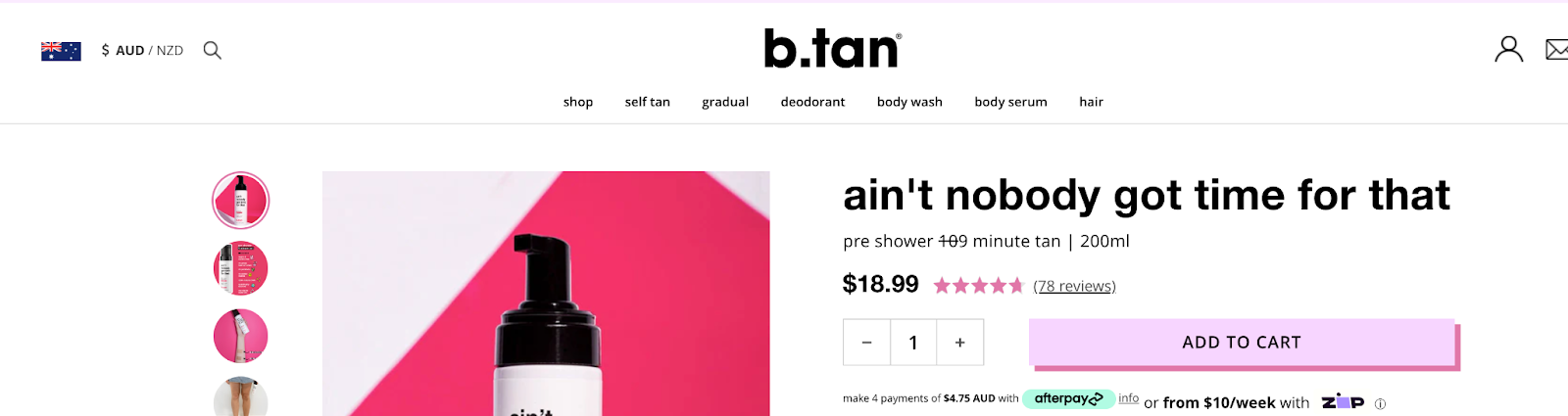
Encourage the reader to take the next step with a big, bold, action-driven button copy close to the top of the page and beside the price and star reviews.
Below you’ll notice that the “ADD TO CART” button is in vibrant colors, double-edged, and very large. You’ll also notice the payment options below and the 4.5 star review directly above. These elements are strategically placed to boost your customer’s confidence in their purchase.
We’ve covered a lot in this blog post, but before I sign off, I want to cover the common mistakes brands make when naming products and writing descriptions.
Then, we’ll recap and wrap up.
Common Pitfalls to Avoid
We’ve discussed many proven practices for naming products and writing product descriptions. I find it helpful to keep a quick checklist of “don’ts ” to refer to when finalizing copy.
Double-check these points about your copy before running with it.
Don’t…
- Overcomplicate the Name or Description: Simplicity wins. No one has time for a name or description that’s hard to understand.
- Be Too Generic or Boring: Names like “Power Drink” or descriptions that lack specificity and relatability fail to engage and delight (inspire word-of-mouth).
- Ignore Cultural or Linguistic Implications: Make sure your name works globally (and doesn’t accidentally offend).
- Prioritize Features: Benefits come first. Always.
- Skip the Testing Phase: Your audience’s feedback is gold. Use it.
[BONUS] Settle for Done: Is this the best representation of your product? Are you giving it the due it deserves with the best copy available?
The Psychology Behind Memorable Product Copy
I couldn’t end this post without geeking out why everything I’ve detailed in the post works.
Without going into too much detail, the psychology of copywriting revolves around understanding human behavior, emotions, and decision-making processes.
Effective copywriting taps into subconscious motivations and persuades people to take action.
Here are the three most important factors when trying to get someone to buy something:
1. Emotion Trumps Logic
- Why It Works: People make purchase decisions based on emotions and later justify them with logic. Emotions like desire, fear of missing out (FOMO), excitement, or relief play a significant role in driving action.
Gerald Zaltman emphasizes the role of unconscious thought in consumer behavior in How Customers Think: Essential Insights into the Mind of the Market. Zaltman reveals that 95% of purchasing decisions are subconsciously driven by emotions rather than logic.
2. Value and Benefits
- Why It Works: Customers care less about what a product is and more about what it does for them. They want to know how it solves their problems or enhances their lives.
Robert Cialdini’s principle of “Reciprocity” in Influence: The Psychology of Persuasion supports this. When customers perceive high value or benefits in a product, they feel compelled to respond with trust or purchase, particularly when they believe it meets their needs or desires.
3. Social Proof and Trust
- Why It Works: People rely on social cues to make decisions, especially when faced with uncertainty. Social proof helps build trust and credibility, reducing the perceived risk of buying. (Remember the stat about — people check out at least 10 reviews before purchasing!)
Cialdini’s principle of “Social Proof” is foundational here. In his research, Cialdini highlights how people tend to follow the actions of others, especially in uncertain situations. Reviews, testimonials, and popularity signals reduce risk and create trust, leading to increased purchases.
Let’s recap and wrap up in the final section to bring this all together.
Wrap-Up: Memorable Product Names and Compelling Product Descriptions
Crafting memorable product names and descriptions is both an art and a science. A great product name captures attention, sparks emotion, and sets the tone for your brand, while a compelling description convinces your customers why your product is exactly what they need.
We covered a lot in this post. Here are the key points to remember:
- Prioritize Clarity and Simplicity: Whether naming or describing, make it easy for your audience to understand and connect with your product.
- Put Your Audience First: Tailor your language and messaging to resonate with their specific needs, desires, and lifestyles.
- Leverage Emotion and Storytelling: Create a sense of connection by evoking feelings or painting relatable scenarios.
- Stand Out From Competitors: Use unique and evocative language to carve out your brand’s space in the market.
- Refine and Test: Iteration and feedback are key. Test your ideas with your audience to find what truly resonates.
- Focus on Benefits: Lead with how your product solves problems or improves lives, then back it up with features.
- Incorporate Keywords Thoughtfully: Optimize your descriptions for search engines without losing natural flow or engagement.
When you align creativity with strategy, your product doesn’t just catch attention—it drives sales and repeat customers.
Need some help coming up with some sticky copy for your products? Let’s collaborate!
